
Create State/System Landing Pages: Color Selection
States/systems can create a customized, branded Transferology® landing page to help promote colleges and universities to prospective students. When navigating to Transferology through the system's referral link or badge, students will see the customized page (assuming it is published) instead of the CollegeSource-branded homepage. This article within Create State/System Landing Pages: An Overview Guide (see Related Articles) explains how users can customize select header text, background color, foreground color, buttons, icons, and borders within the page.
Articles in this series:
States and systems must work with CollegeSource to collaboratively create the initial landing page. Once the landing page is in place, it will be maintained by users at the participating institutions with the State Coordinator role in the Lab, and any other State Coordinators given access to edit the page.
The hex numbers of school colors can be used to customize select header text, background color, foreground color, buttons, icons, and borders within the landing page. Hex codes are six characters, contain numbers 0-9, and letters a-f. The state/system will need to supply hex code numbers for the text color, section 2 background and foreground colors, secondary color, and tertiary color as described below.
Text Color
The Text Color is used to establish the color of the header text appearing on a white background.

Primary Background and Foreground Colors
The Primary Foreground Color sets the text and button color in this section.

Secondary Color
The secondary color is used to establish the color of the main buttons on the Transferology homepage ("Sign up" and "Get started"), the background color for three custom resource links, and various icons used throughout the page

Tertiary Color
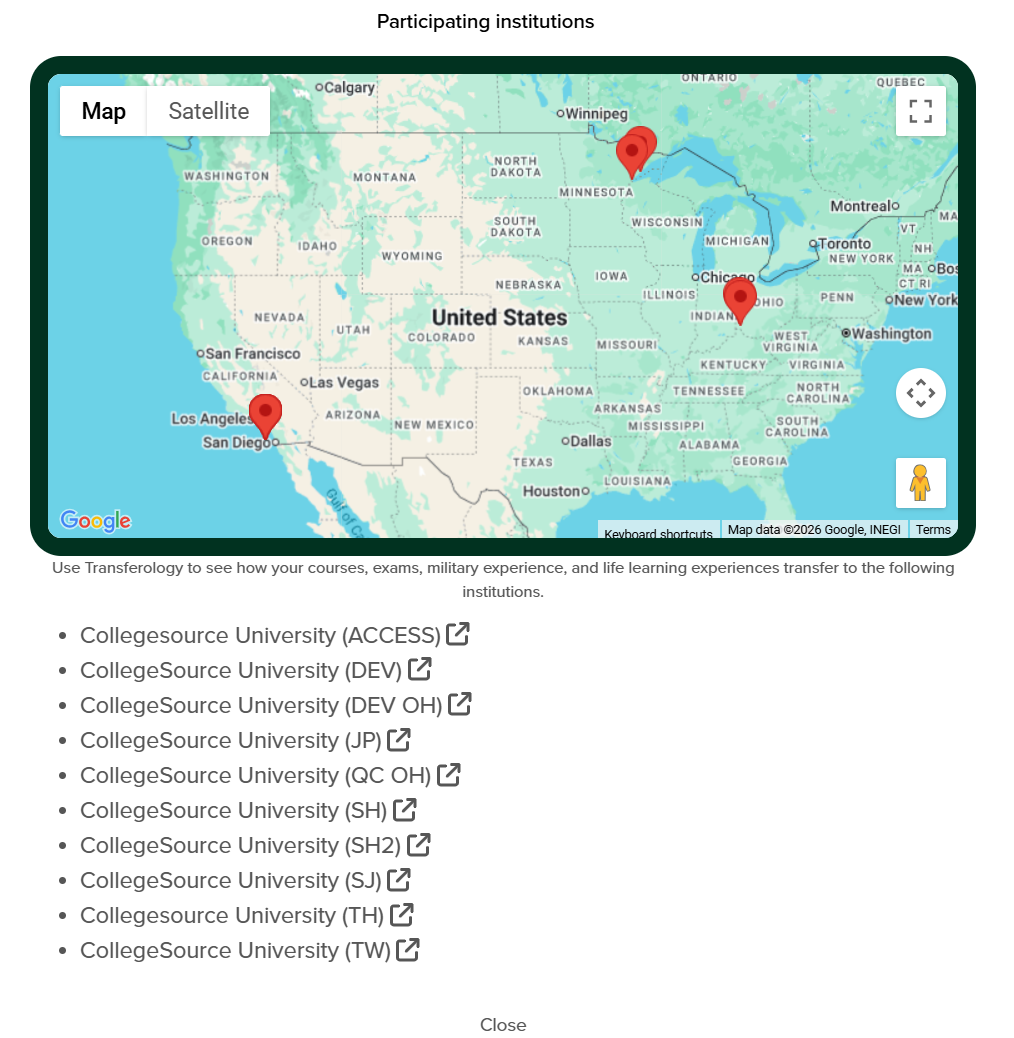
The tertiary color is used to establish the border color for the Participating institutions map. This map pinpoints the names and locations of institutions associated with the state/system landing page. If provided, users will also see an icon with an arrow that, when selected, will direct the user to the institution's website.
Transferology Logo Color
The Transferology Logo Color determines whether the Transferology logo text displays in white or black on the menu bar. This setting is only active when My State/System Institutions Only is selected in the Match Results Display dropdown and only applies to the Will My Courses Transfer? menu. The Transferology logo within the state/system landing page is not changed.


Accessibility Requirements
- The text color hex used is #00008b (dark blue).
- The section 2 background color hex used is #008080 (teal).
- The section 2 foreground color hex used is #FFFFFF (white).
- The secondary color hex used is #b94700 (orange).
- The tertiary hex code used is #4a584b (dark green).